
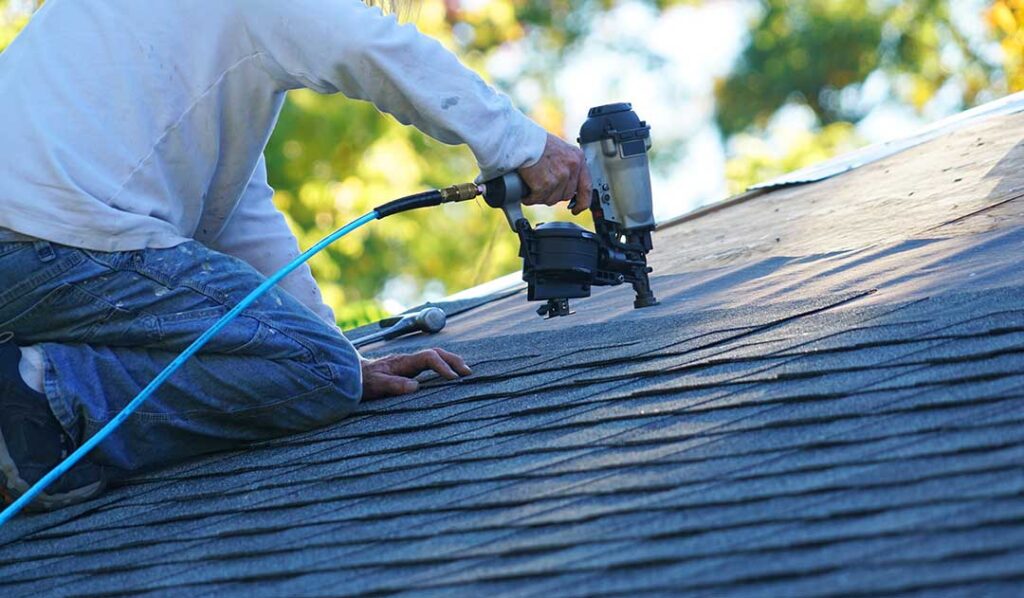
Roof maintenance is mostly about spotting small problems before they become leaks, structural damage, or interior repairs. For homeowners in Whitesboro, NY, a practical routine should account for snow, freeze-thaw cycles, spring rain, summer heat, falling leaves, and wind.
Most ground-level inspections and basic upkeep can be handled safely by a homeowner. Roof surfaces, steep slopes, wet shingles, icy conditions, and areas near power lines create serious fall hazards and should not be approached without the proper training and equipment.
What roof maintenance can a homeowner safely do?
A homeowner can inspect visible roof areas from the ground, clean gutters from a stable position, trim nearby branches, check the attic, and look for signs of moisture indoors. These tasks often reveal developing problems without requiring anyone to climb onto the roof.
Useful items include:
- Binoculars
- Work gloves
- A sturdy ladder used according to its instructions
- A flashlight
- A moisture meter, if available
- A camera or phone for documenting changes
- A soft brush for removing light debris from accessible areas
Avoid walking on shingles whenever possible. Granules can be loosened, shingles can crack under foot traffic, and a damp or frosty surface may be dangerously slippery.
How often should a roof be inspected?
A roof should receive a basic visual check at least twice a year: once in spring and again in fall. Additional checks are sensible after strong wind, heavy snow, ice buildup, or a storm involving fallen branches.
Spring inspection should focus on winter damage, including:
- Missing, lifted, or cracked shingles
- Bent or loose metal flashing
- Damaged chimney or plumbing vent areas
- Gutter sections pulled away from the roofline
- Water stains in the attic
- Debris trapped in valleys or behind roof fixtures
Fall inspection should focus on clearing leaves, checking drainage, and making sure the roof and attic are ready for snow. A roof does not need to look perfect from the ground to be sound, but changes from one inspection to the next deserve attention.
What should be checked from the ground?
Binoculars make it possible to examine many roof details without climbing. Look for shingles that appear darker, curled, raised, broken, or missing. A small area of discoloration can sometimes indicate moisture, but discoloration alone does not always identify the source.
Also inspect:
- Roof edges and eaves
- Valleys where water flows
- Flashing around chimneys, skylights, and vents
- Ridge caps
- Exposed underlayment or wood
- Sagging lines along the roof plane
- Moss or algae growth
- Branches resting on or rubbing against the roof
A sagging section is more concerning than ordinary surface wear because it may indicate a problem with the roof deck, framing, or moisture exposure. It should not be treated as a cosmetic issue.
How should gutters and downspouts be maintained?
Gutters help move roof water away from walls, windows, foundations, and walkways. They should be cleaned when leaves and fine debris begin to restrict flow, commonly during late fall and again after major spring pollen or seed drop.
While cleaning, check whether:
- Water can move freely through the downspout
- Gutter seams are separating
- Fasteners are loose
- Sections are sagging
- Water spills over the front edge during rain
- Downspouts discharge several feet away from the foundation
- Extensions have become buried, crushed, or disconnected
Do not use a metal tool near electrical service lines, and do not place a ladder on icy, muddy, or uneven ground. Gutter cleaning becomes especially hazardous when winter weather has arrived.
Why does attic ventilation matter?
A properly balanced attic ventilation system helps control heat and moisture. It does not make a roof maintenance-free, but it can reduce condensation and help limit damaging temperature swings.
During a cool-weather attic check, look for:

- Damp insulation
- Water droplets on nails or roof framing
- Mold-like staining
- Frost on the underside of the roof deck
- Blocked soffit vents
- Bathroom exhaust terminating inside the attic
- Daylight visible through areas that should be sealed
Warm, moist air from bathrooms, kitchens, or living spaces can condense against cold roof components. Exhaust fans should discharge outdoors through properly sealed ducts, not into the attic. Blocking soffit vents with insulation or stored items can also interfere with airflow.
Can moss and algae damage shingles?
Moss should not be ignored, particularly when it grows thick enough to lift shingle edges or hold moisture against the roof. Algae staining may be mostly cosmetic, but it can signal a damp area where debris and moisture remain for long periods.
Do not pressure-wash shingles. High-pressure water can remove protective granules and force water beneath the roofing material. Avoid scraping aggressively with a shovel or stiff metal brush. Nearby tree limbs should be trimmed carefully so they do not shade the roof excessively or rub against the surface.
Chemical treatments can damage plants, siding, metal, or roofing materials if used incorrectly. Product directions should be followed exactly, and runoff should be kept away from landscaping and household water collection areas.
How can ice dams be prevented?
Ice dams form when heat escapes into the attic and melts snow on the upper roof. The water runs toward colder eaves, where it refreezes. Ice dams can force water beneath shingles and into ceilings or walls.
The most useful preventive measures are attic air sealing, adequate insulation, clear soffit ventilation, and properly functioning roof ventilation. These improvements are not usually quick surface repairs, and they should not involve cutting or altering roof components without understanding the system.
Never chop ice dams with a hammer or axe. Do not use open-flame devices or improvised heating equipment on the roof. During active winter buildup, keeping people away from falling ice and snow is also part of roof safety.
What indoor warning signs should not be overlooked?
Some roof problems appear inside before they are obvious outdoors. Check ceilings, upper-wall corners, attic insulation, and areas around skylights or chimneys after heavy rain or snowmelt.
Warning signs include:
- Brown or yellow ceiling stains
- Peeling paint
- Damp insulation
- Musty odors
- Bubbling drywall
- Drips around light fixtures
- Repeatedly wet attic framing
- Stains that grow after storms
Water may travel along rafters or wall cavities, so the stain may not be directly below the roof defect. Turn off power to a wet electrical fixture if it can be done safely from a dry location, and avoid touching water near wiring.
When is DIY maintenance no longer appropriate?
DIY maintenance is not suitable when the task requires walking on a steep, wet, icy, or damaged roof. It is also inappropriate around unstable shingles, sagging roof sections, exposed structural wood, significant leaks, or power lines.
A qualified roofing or building professional is warranted when there is structural damage, extensive storm damage, persistent moisture, suspected mold, or a repair requiring specialized fall protection. In Whitesboro, winter conditions can make a roof unsafe even when the slope appears moderate.
Keep dated photographs and notes after each inspection. Comparing the same roof areas over time makes it easier to distinguish normal aging from a developing problem and provides useful information if a safety assessment becomes necessary.
